


Guide to Email Marketing Trends in 2026
Retain: 70%. Needs to be slightly edited/ significantly rewritten and good to go
If you thought email marketing is dead, you’re wrong. In fact, in 2026, it’s getting smarter.
Now, inbox success has less to do with sending more emails and everything to do with relevance, timing, and trust. As customer expectations rise and AI reshapes how messages are created and delivered, brands must rethink their approach.
The most effective campaigns focus on personalization, data-driven insights, and real value, not batch-and-blast tactics.
This guide explores email marketing best practices 2026, breaking down what actually works, what no longer does, and how businesses can build email strategies that drive engagement, loyalty, and measurable results.
Enhancing Your Email Marketing Strategy
In 2026, email marketing isn’t about sending more, it’s about sending smarter. So, I came up with this framework.
The R.E.A.C.H. Email Framework helps SMBs and modern businesses craft campaigns that get noticed, drive engagement, and turn attention into action. Each element ensures your emails are relevant, timely, and actionable, building trust and boosting results.
R – Relevant Personalization
Go beyond first names. Use behavior, preferences, and intent to make each email feel tailored. AI can help scale personalization without losing the human touch. Tell them what they should order, what they will love, and what you think they are looking for.
E – Engagement-Based Segmentation
Segment by what your audience does, not just who they are. Engagement-driven lists increase opens, clicks, and conversions. Did they click on a blog? Send them a newsletter subscription to get them in their inbox every week. Did they click on an ad for a discounted item? Send them similar offers.
A – Attention-Aware Timing
Send emails when your audience is most receptive. Smarter timing keeps you visible without overwhelming inboxes. Don’t send all of your audience an email at 9 am. Break it down into behavior-based segments and hit “Send” when they are more likely to see it.
C – Clean, Mobile-First Design
Design for thumbs, not cursors. Mobile-friendly emails should be fast, easy to scan, and effortless to interact with. Clear headings, concise copy, tappable buttons, and well-spaced elements help readers navigate quickly; because on mobile, most people skim before deciding to engage.
H – High-Impact CTAs
Each email should guide recipients toward one clear action: Learn more, Book, or Buy. Clarity drives results. Avoid clutter and competing CTAs—too many choices dilute attention and lower engagement. Make the desired action obvious with prominent buttons, concise copy, and visual cues that naturally lead the eye.
With R.E.A.C.H., your emails don’t just land in inboxes—they get opened, read, and acted upon. It’s the blueprint for email marketing that works in 2026 and beyond.
Extra Email Marketing Tips for 2026
If you want to compete with the big guns, you need to walk the walk and talk the talk. Here are a few extra tips for your email marketing campaigns this year.
1. First-Party Data Becomes the Foundation
With third-party cookies effectively phased out, email strategies are now built on first- and zero-party data. Preference centers, interactive emails, and voluntary data sharing are becoming core to effective segmentation and personalization.
To ensure your data is truly first-party, focus on collecting it directly from owned channels. This means optimizing website forms, newsletter sign-ups, gated content, checkout flows, and post-purchase surveys to capture information with clear user consent. Avoid rented lists or opaque data sources—if you didn’t collect it yourself, you don’t own it.
Practical steps like progressive profiling (asking for small pieces of information over time), clearly labeled opt-ins, and well-designed preference centers help improve both data quality and engagement. When customers understand what you’re collecting and why, they’re more likely to share accurate information.
Trust is now a growth lever. Brands that prioritize transparent, ethical data collection build stronger relationships and outperform those still relying on inferred behavior alone.
2. AI-Powered Optimization Goes Mainstream
Artificial intelligence is no longer experimental in email marketing. In 2026, high-performing brands use AI in focused, practical ways to improve efficiency and results without losing their voice.
Here is what you need to do:
- Use AI to optimize send times based on individual subscriber behavior, not broad averages.
- Generate and test subject line variants with AI, then let performance data decide the winners.
- Personalize content blocks at scale, such as product recommendations, offers, or messaging based on engagement history.
- Automate analysis and insights, so teams spend less time in dashboards and more time on strategy.
- Keep brand voice human-led by defining tone, language, and messaging guidelines before applying AI tools.
- Review AI-generated content before sending to ensure it aligns with brand values and customer expectations.
The most successful brands treat AI as an enabler, using it to move faster and smarter, while humans own the narrative and relationship.
3. Engagement Quality Outweighs Open Rates
Mailbox providers are increasingly prioritizing engagement signals like replies, dwell time, and forwards to determine inbox placement. As a result, smart marketers are shifting focus away from vanity metrics like opens and toward signals that reflect real human interaction.
This means email content has to work harder. High-performing brands design emails that invite action: asking questions, encouraging replies, linking to genuinely useful resources, or prompting a next step beyond a simple click. When subscribers engage meaningfully, mailbox providers take notice.
In 2026, deliverability is no longer just a technical issue; it’s a content and experience problem. Emails that spark conversation and sustained engagement build stronger sender reputation and long-term inbox trust.
4. Interactive Email Experiences Become Standard
Interactive elements like embedded polls, accordions, and carousels are now widely supported across major email clients and increasingly expected by users. These features allow subscribers to engage directly within the inbox, reducing friction and shortening the path to action.
Instead of forcing readers to click through to a landing page, leading brands use interactivity to gather preferences, highlight multiple options, or reveal more information without disrupting the experience. This not only improves engagement but also delivers cleaner first-party signals.
In crowded inboxes, interaction without a click is a competitive advantage. The easier you make it for subscribers to engage, the more likely they are to respond, and as a result, the stronger your long-term performance becomes.
Imagine receiving an email from a SaaS tool you use. Instead of just reading about new features, you see an embedded carousel showcasing the updates. You can click through different screenshots directly in the email, and a mini-poll asks which feature you’d like to see improved next. Without leaving your inbox, you’ve explored, interacted, and given feedback.
This type of interactive experience reduces friction, increases engagement, and gives the brand valuable first-party signals, all while making the email feel dynamic and personal rather than static and “salesy.”
5. Privacy-First Communication Builds Brand Equity
Consumers in 2026 expect clarity and control over how their data is used. They want to know why they’re receiving emails, what data is being collected, and how it benefits them; not buried in legal language, but explained clearly and simply.
High-performing brands build transparency directly into the email experience. This shows up in plain-English permission statements, clear unsubscribe options, accessible preference centers, and messaging that reinforces value rather than obligation. When subscribers feel informed and in control, trust follows.
Compliance may keep you out of trouble, but it won’t drive growth. In today’s inbox, transparency is a competitive advantage and brands that treat it as part of the customer experience see stronger retention, engagement, and long-term loyalty.
6. Accessibility and Dark Mode Are Non-Negotiable
With the majority of emails now opened on mobile devices and in dark mode, accessibility-first design is essential to performance. Design choices like contrast, spacing, and typography directly affect whether an email is read, skimmed, or ignored.
High-performing brands prioritize practical accessibility improvements: larger, legible fonts; high-contrast color combinations that hold up in dark mode; tappable buttons with enough spacing for thumbs; and layouts that scan easily on small screens. Even small details—like avoiding text embedded in images or using descriptive alt text—can significantly improve engagement.
The takeaway is simple: accessibility isn’t just about compliance or edge cases. Emails designed to be inclusive, readable, and usable for everyone consistently perform better for anyone. especially in crowded mobile inboxes.
7. Email Integrates Tightly with Multichannel Journeys
Email no longer operates in isolation. In 2026, it works alongside SMS, in-app messaging, and social channels to create cohesive, end-to-end customer journeys, especially in B2B and SaaS environments where buying cycles are longer and more complex.
High-performing teams design messaging around the customer journey, not the channel. An email might introduce a feature, an in-app message reinforces it at the moment of use, and a follow-up email or LinkedIn touchpoint drives deeper engagement. Each channel plays a specific role, with timing and context doing the heavy lifting.
The takeaway is clear: orchestrated messaging outperforms siloed campaigns. When email is integrated into a broader lifecycle strategy, it becomes more relevant, more timely, and far more effective at driving conversions.
8. Value-Driven Content Outperforms Sales-Only Messaging
In 2026, inboxes are crowded, attention spans are short, and buyers are savvier than ever. Simply pushing your product isn’t enough; emails that focus solely on sales get skimmed, ignored, or unsubscribed. The brands that cut through the noise tell stories, share insights, and deliver real value before ever asking for a click.
Think about it like this: instead of sending “Buy now” after every interaction, high-performing campaigns might share a quick tip, a how-to guide, a case study, or industry insight that helps the subscriber succeed.
A SaaS company could highlight a clever way to automate reporting, a B2B brand could share benchmarks from their sector, or an e-commerce store might provide style inspiration based on past purchases. Over time, these emails build trust and authority. So, when the brand does make an offer, the recipient is already engaged, appreciative, and far more likely to act.
The story is the message: emails that educate, entertain, or inspire create relationships, not just transactions. Value-driven content doesn’t just improve engagement metrics, it drives long-term loyalty, repeat interactions, and higher lifetime customer value.
9. Consistency Wins Over Campaign-First Thinking
In 2026, email success isn’t about sending a big splash every now and then—it’s about building a sustainable rhythm. High-performing brands focus on consistency in tone, cadence, and structure, creating a sense of familiarity that subscribers recognize and trust.
When your audience knows what to expect—from the voice you use to the layout of your emails—they’re more likely to engage, respond, and take action. This doesn’t mean being boring; it means balancing creativity with a predictable framework that reinforces your brand identity.
The takeaway is sustainable email programs outperform short-term spikes. Brands that deliver value regularly, rather than chasing one-off opens or clicks, build stronger relationships, better deliverability, and long-term engagement that truly moves the needle.
Successful Email Marketing Strategies: How Others Do It
- VSCO’s Strategy: Limited-Time Free Trial Offers

VSCO, a company that offers subscription-based services, has a clever way to attract new customers. They offer free trials for a short period via email. Getting something for free is always tempting, but it’s important to make customers act fast.
VSCO addresses this issue by reminding customers that the free trial is only available for a short period and highlighting how much time they have left to enjoy the offer.
This method is effective because it creates a sense of urgency. Prospects don’t like missing out, especially with free offers and the urgency acts as their motivation to sign up.
Even if your company doesn’t offer free trials, you probably have offers or discounts only available for a limited time. Telling your customers exactly how long they have to use these offers/services will help them act quickly instead of delaying their decision.
Why VSCO’s approach works
VSCO’s strategy works well because it’s based on the natural instinct of FOMO (fear of missing out) on anything valuable, especially when it is free. Setting a deadline in emails pushes customers to act quickly, increasing the chances of converting them into paying subscribers later.
- Airbnb’s Personal Touch in Emails
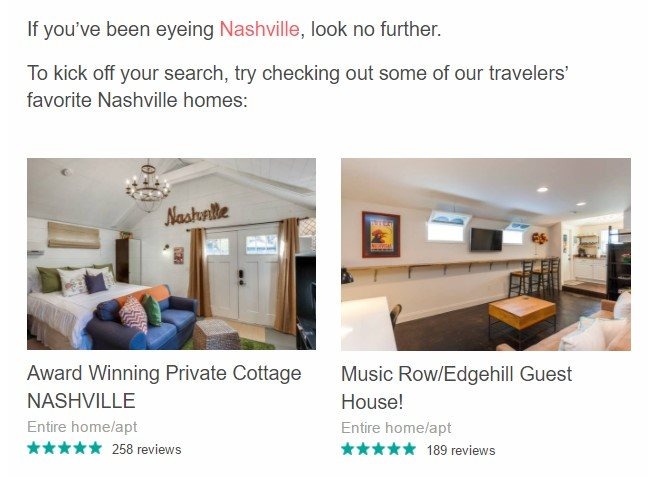
Airbnb stands out in email campaign examples for its personalized approach. Once someone signs up for their emails, Airbnb keeps the spark alive. They do this by sending emails matching the subscriber’s searches and interests.
For example, if you’ve been looking at places to stay in a particular city on Airbnb but haven’t booked anything, Airbnb notices this. Then, they’ll email you attractive options in the city you’re interested in. This method is way more engaging than sending the same generic email to everyone.
If you’ve already shown interest in a specific location by browsing, receiving an email focused on that location can nudge you toward making a booking. It feels more relevant and timely, rather than random listings from anywhere worldwide, which you simply ignore.
While this tailor-made strategy is quite specific to Airbnb’s service in the travel and accommodation sector, it highlights the power of personalized email content. Understanding and acting on your subscribers’ interests can lead to better engagement and results.
Why Airbnb’s email strategy is successful
Airbnb’s approach to email marketing is successful because it directly targets the user’s interests, making the content highly relevant. This relevance increases the likelihood of the user engaging with the email and, potentially, making a booking.
Personalizing emails based on past browsing behavior demonstrates to users that Airbnb understands their needs and preferences, encouraging them to take action.
- Sephora’s Tutorial Campaigns
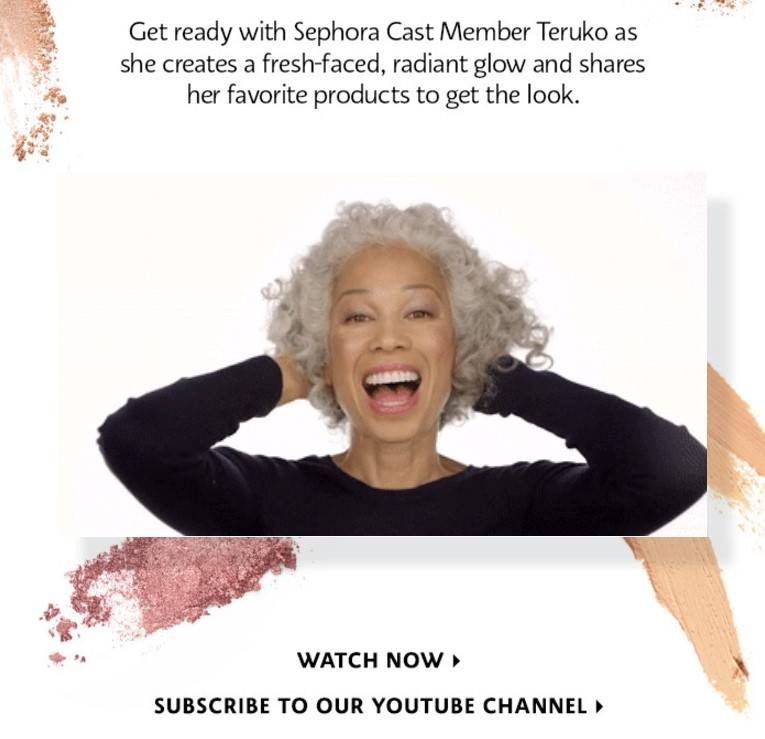
Sephora uses a unique approach to convince customers to buy their products. They send out emails with free video tutorials showing how to use them. This is particularly useful because sometimes customers are interested in a product but aren’t sure how to use it, which can prevent them from purchasing it.
Sephora removes this uncertainty by providing tutorials and gives customers the confidence to buy. The visual appeal of video thumbnails can also grab the attention of someone who might not have been initially interested, sparking curiosity and getting them to watch the tutorial.
This strategy isn’t limited to beauty products. Any company can use it. For example, a clothing store could send out style guides for its new collections, or a B2B software company could share successful customer outcome case studies.
You can choose different formats for these educational emails, from simple text and images to embedding videos. The key is to create content that helps your subscribers understand the value of your products or services, which will positively impact your sales.
Why Sephora’s emails are effective
Sephora’s approach effectively converts potential customers into buyers by addressing and eliminating doubts about how to use their products through emails.
Demonstrations or tutorials can significantly influence purchasing decisions by providing clarity and confidence to the customer, showcasing the product’s value and practical application.
Wrapping it Up
Ready to turn your email program into a growth engine? Whether it’s building first-party data, designing interactive campaigns, or crafting value-driven content that actually converts, we help brands create email experiences that engage, delight, and deliver results. Let’s make your emails work smarter, not harder—drop us a note and start transforming your inbox strategy today.